
Kaizntree OS
The Results
20% Time Savings: Less time spent planning and recording production
5–10% Inventory Savings: Less overproduction and overlooked stock
3x Faster Record Keeping: Complete production records faster than paper and pen
About Barakah Eats
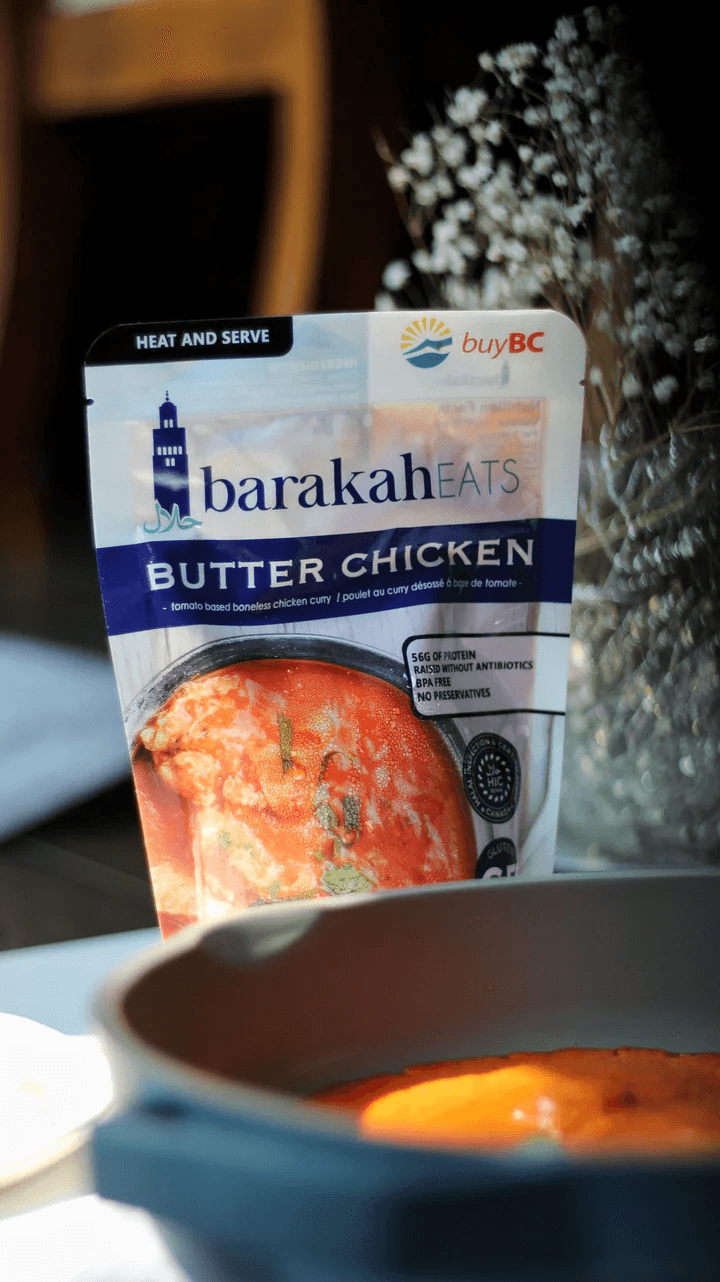
Barakah Eats produces South Asian frozen halal entrées for grocery retailers, foodservice customers, and institutions across Canada.
The company began as a family-run restaurant in 2005 before launching its packaged food brand in 2019. As the business grew, so did operational complexity. With dozens of SKUs, expanding distribution channels, and increasing food safety requirements, managing inventory and traceability through spreadsheets and paper became increasingly difficult.
Like many food manufacturers, Barakah Eats must maintain strict food safety and traceability standards while continuing to scale. The company undergoes regular Canadian Food Inspection Agency (CFIA) inspections, operates under Good Manufacturing Practices (GMP), and is strengthening its Hazard Analysis and Critical Control Points (HACCP) program as part of its broader food safety initiatives.
To support that growth, Barakah Eats needed a system that could improve production planning, provide accurate inventory visibility, maintain audit-ready records, and deliver the traceability required for inspections, audits, and future certification efforts.
The Challenge
Spreadsheets and Paper Records Slowing Growth
Barakah Eats previously managed inventory through spreadsheets, paper records, and frequent manual stock counts. With more than 60 products across retail and foodservice channels, records frequently fell out of sync, forcing the team to physically verify inventory before planning production or committing to customer orders.
It also made traceability far more difficult during audits and recalls, requiring staff to piece together information across multiple systems under tight timelines.
"We were having problems as we grew with traceability and inventory. A lot of it was tracked with paper and pen, so everything wasn't in sync. We'd get a PO, check the freezer, and realize we were short."
— Rushd Khan, Founder of Barakah Eats
Why Barakah Eats Chose Kaizntree
1) Robust System Built for Growth
Barakah Eats evaluated several inventory systems but found Kaizntree offered more of the capabilities it would need as the business grew.
"Kaizntree was more robust. There were features we weren't using at the time, but I could see us needing them six months later. That's already happened."
— Rushd Khan, Founder of Barakah Eats
2) Hands-On Implementation
The implementation experience also played a major role in Barakah Eats' decision.
Rather than handing the team software and expecting them to figure it out on their own, Kaizntree worked closely with Barakah Eats throughout onboarding to configure the system, answer questions, and ensure the team was comfortable using it.
"The support was a big factor. At the beginning, we met twice a week, and the team was there as long as we needed help."
— Rushd Khan, Founder of Barakah Eats
By taking a hands-on approach to implementation, Kaizntree helped Barakah Eats get up and running quickly while minimizing the burden on the internal team.
The Solution
1) Real-Time Visibility Across Inventory and Production
Today, Barakah Eats uses Kaizntree as its operational system of record. Inventory, purchasing, production, and sales orders are all managed in one place.
When an order arrives, the team can immediately see what is available, what ingredients are missing, and what needs to be produced.
"I can receive a PO on my phone, open Kaizntree, and immediately see what we need to do for production. Even if I'm not at the warehouse, I can make decisions instantly."
— Rushd Khan, Founder of Barakah Eats
2) One System Across their Team
The system is used by both the front office and production teams, providing a centralized location for the information needed to run day-to-day operations.
"We have it in our office and our packing room. The production manager uses it, and the team is using it every day."
— Rushd Khan, Founder of Barakah Eats
Instead of searching through spreadsheets, paper records, and filing systems, the team can quickly access inventory data, production records, lot traceability information, and supporting documentation from one place.
"It's a one-stop shop. We're receiving inventory, entering purchase orders, creating sales orders, and it's all linked. We know what materials we have, what needs to be ordered, and what to produce."
— Rushd Khan, Founder of Barakah Eats
3) Keeping Accounting and Financials in Sync
As Barakah Eats grew, maintaining accurate financial records became increasingly important. Rather than manually re-entering information between systems, the team uses Kaizntree to keep operations and accounting in sync.
All relevant data created in Kaizntree flow directly into QuickBooks to ensure that accounting records stay up to date. This has given Barakah Eats has greater visibility into margins, profitability, and overall business performance.
"Once we create a sales order in Kaizntree, we can push it directly into QuickBooks. After the initial SKU setup, the integration has been seamless."
— Rushd Khan, Founder of Barakah Eats
With inventory, production, sales, and accounting connected, the team can spend less time updating records and more time understanding the financial health of the business.
4) Audit-Ready Traceability
For food manufacturers, traceability is critical. Barakah Eats uses Kaizntree as part of its food safety and compliance program, supporting traceability requirements across CFIA inspections, GMP programs, and HACCP audits.
Every ingredient, batch, inventory movement, and customer shipment is connected within a single system, allowing the team to quickly access the records required during audits, inspections, and mock recalls.
"Traceability is everything. You can keep your facility as clean as possible, but if you can't prove that you can trace your product front and back, then you will fail."
— Rushd Khan, Founder of Barakah Eats
As Barakah Eats continues to strengthen its food safety program and work toward BRCGS certification, Kaizntree provides the traceability and documentation needed to support that growth.
The Results
Greater Control Over Inventory and Production
Barakah Eats now plans production using real-time inventory and demand data.
"We can see what is already in stock, avoid producing excess inventory, and complete production records much faster. We also have the data to question differences between ingredient usage and finished output."
— Rushd Khan, Founder of Barakah Eats
The improved visibility has helped Barakah Eats make more informed production decisions, reduce excess inventory, and better understand what is happening across the operation.
Stronger Accountability on the Production Floor
The visibility has also created stronger accountability across the production floor. Variation in production runs that have previously gone unnoticed are now identified and investigated.
"The system is now calculating everything in real time. Before, people had excuses. Now I can show exactly what we produced, how much material we used, and what the expected output should have been."
— Rushd Khan, Founder of Barakah Eats
For Rushd, that visibility serves as an important check and balance, helping the team operate more consistently while creating greater accountability around inventory usage and production performance.
Advice for Other Manufacturers
Implement Before Manual Processes Become Entrenched
Barakah Eats considered inventory and traceability software for two years before moving forward. Rushd's lesson: implement before launching more SKUs and hiring your production team so they train the right way from day one.
"The earlier you bring it on, the easier it is to standardize processes and train your team. As the business grows, changing those habits becomes much harder."
— Rushd Khan, Founder of Barakah Eats